
THE BATS: A novel chapter
4.
“Beatriz!”, Liana called, knocking loudly on the high mesquite gate.
She pressed her shoulder to it but it didn’t open. She heard dogs stirring within, their collar chains rattling. At last the gate groaned inward and Beatriz, out of breath, braids and bosom and pleated skirt set in motion by her girth, rushed forward and clasped her in a fierce abrazo. The hounds yapped and pawed Liana’s legs.
“Ay, Lia! You’re back! Sancho! Manchita! Down!”
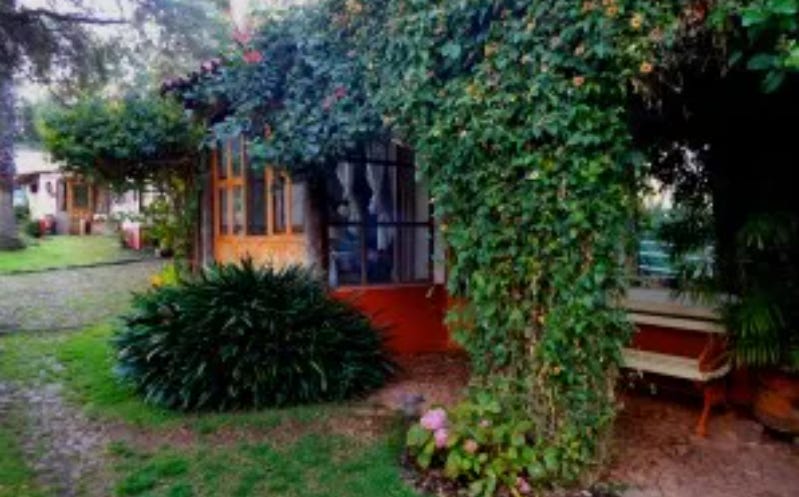
Beatriz reached for her suitcase but Liana dragged it herself across the gravel, past the converted stable rooms, down the cobbled garden path to the main house. She glanced up at the vine-trellised wall of adobe and stone, the overblown roses, the purple bougainvillea along the roofline of broken tiles.
Familiar aromas clogged the entrada: leather, dust, ammoniated cleansers, pine and avocado wood from fires lit even on summer evenings. Crossing the sala, she saw Beatriz’ sewing stacked on a couch cushion before a flickering soap opera. She trailed her down the unlit hallway, past the door to her mother’s old studio, to the kitchen.
Doors open to the patio let in bright late light and a breeze off the lake. She sat at the long mesquite table, inhaling the aroma of toasted chiles and café de olla. Beatriz stood at the stove, outlined by light, her thick, gray-streaked hair tied back.
“Liana, you’re so thin. Don’t they feed you in California?”
Liana gripped the earthen mug. No, she thought, there we feed ourselves. Spare, sleek enough, dressed in functional black for a production meeting, a business trip. Not like you abundant Purépecha women swathed in your elegant blue and white rebozos.
Beatriz lit a fire under a pan. “Here, I made chiles rellenos.”
“Gracias, Beatriz. I’ll have them tonight.”
Beatriz shut down the fire, grabbed a wooden spatula and slid the chiles onto a ceramic plate laid with paper to soak up the grease, then covered them in foil. She sat down heavily across from Liana. “Nico didn’t come.”
“No. He sends saludos.”
She and Nico had grown up under this scored, burnt kitchen table until they were tall enough to sit at it. The scrambled warmth, the madness and neglect, the shouts and kisses. Now she lived in a clean white flat where everything worked, with a husband who after sex went to the bathroom and washed his hands.
“Your father would walk up to the village every morning and have a drink at the Clave Azul with Miguel Ángel. Then he’d sit on a bench in the plaza until lunchtime. There weren’t many left who would speak to him. Then he’d walk home along the lake road. When he couldn’t climb the stairs to his studio anymore he moved out to one of the stable rooms. He’d sit in a chair outside, looking at the lake until it got dark. Last Friday I found him there.”
Watching Beatriz dry her tears with her skirt, Liana wondered who the tears were for. All of us, she supposed. Beatriz had raised her and Nico as much as anyone. Arriving here at nineteen from a village further up the lake, already with two kids of her own, she’d surely been exposed to things a Purépecha girl, any girl, should never have to see. What ministrations had her father extracted when she was comely, let alone when she was the last left to serve him?
“Nobody comes here anymore Liana. Only me, and Hilario to garden.”
“Is Blind James still around?”
“Sometimes, when he’s not off traveling.”
“Where are your boys?”
“Felipe works construction in Atlanta. He returns every harvest and stays until New Year’s. Marco is head chef at an Italian restaurant in Chicago. Can you believe it? He couldn’t do a thing in the kitchen here except eat. He has papers and a family up there. He’s coming to visit in a few days.” She sat back down at the table. “The boys would like to come home but the only work around here is with the narcos.”
She shook her head. “Tezcatlan has become a village of women and children and old people.”
“Who pays you?”
“Don Benito sends money in an envelope from Morelia every Friday.”
“Has he told you what will happen to the house?”
“No. Some in the village say Milenio wants it.”
“They’re in Tezcatlan.”
“They’re everywhere, Lia.” She stood up, grunting, then reached over and squeezed Liana’s hand. “Bueno, ya me voy. See you Monday, eh?”
At the patio door she turned and said, “How old are you now?”
“Twenty-nine.”
“Fourteen years it’s been, guapa. It’s good to have you back. Eat the chiles.”
Liana smiled. “I will, Beatriz.”
Then Beatriz said, “Tomás stopped by yesterday. He asked if you’d be coming.”
Liana waited to see if she had any more to say about that. But she only said, “Lock the gate before it gets dark,” and shut the door behind her.
Liana watched a flock of egrets glide low over the water, feeling a stab of panic as she did at fifteen when Beatriz would leave her alone in the house with her father.