
NIGHT RIDE TO CUZCO
(Re-posted from last year…)
The sign said: 364 k’s to Cuzco.
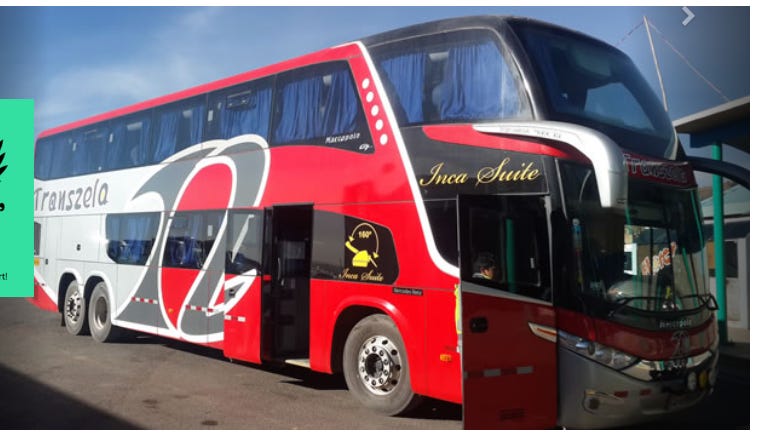
That evening, in the clamorous, fluorescent Puno bus station in southern Peru, S and I boarded our bus. We had bought sleeper tickets, lured by a hint of luxe and a night’s rest after a long stint up the Chilean coast, across the Bolivian altiplano to La Paz, then on to Titicaca, Copacabana, and the border crossing into Peru.
The sleeping area turned out to be an open, sunken hold in the middle of the floor with two thin, hard mats. As the bus started off, we could see the road strobing past through missing rivets and cracks in the metal flooring, letting in cold air and exhaust fumes, until we left the lights of Puno behind and rattled into the winding dark.
Above us, in the second-class seats, passengers snoozed or slept. A rotund, copper-skinned woman in an indigenous skirt chatted with her two boys in Aymara.
The temperature began to drop. We had no bedding and were soon shuddering with cold. We rifled our backpacks, swaddled ourselves in what we had, but it did little to stave off the icy air and gas vapors streaming in from the fissures below. S looked miserably over at me, her teeth chattering.
“How’s the soroche?” I said.
“Bad.”
Between Valparaíso and La Paz, S had been gradually overtaken by nausea, dizziness, exhaustion. It was easier to attribute her discomfort to altitude sickness, soroche, than the period she’d just missed and the previous one that had barely happened. We’d left uncertain lives behind to make this journey, bearing more baggage than the rigs on our backs. In La Paz she could have done the test but was following signs and portents instead, searching for a propitious place. Cuzco, maybe. She looked pale, faint. I couldn’t help but think that being knocked about like clothes in a washer in the bottom of this icy, noxious bus at 12,500 feet would be a good way to terminate an early pregnancy.
Then you, the Aymara woman, were standing above us, holding out a blanket. S looked up and waved her hand as if to say no, it’s for you and your boys.
You frowned and thrust it again at her, as if to say: Don’t be an idiot.
S reached up and took it. It was thick, hand-woven, colorful, and warm. She wrapped it around her. Soon her trembling abated. Before long, she slept.
Somewhere during the night I looked back up at you, the Aymara woman, and you were dozing, your chin on your chest, your boys asleep against you.
The bus pulled into Cuzco at first light. We stood stiffly up. Outside in the station we found you and handed back the blanket. Our thanks couldn’t have been more heartfelt. You smiled widely, took the blanket, and walked off with your boys.
The girl is grown now, healthy and smart and beautiful. Sometimes it is hard to find the good in people, and it is then that we think of you and speak of you, the woman with the blanket on the night ride to Cuzco.
Long ago, as a Peace Corps volunteer, I lived in a town midway between Puno and Cuzco. As I read your piece, I kept remembering the bus rides I used to take along the same route you mention--except that the road surface was dirt and rutted then, and the lumbering, old San Cristóbal had holes in the floor. Always dusty and sometimes very cold, the rides were invariably a people-centered adventure, many of those around me like the concerned, generous lady who insisted S cover herself with the blanket.
Well, the tears fell this morn....sweet tears, sweet woman, and yes, there are good humans on this planet, just not enough of them right now in our government. If any. Gracias for sweet tears and the Aymara woman.